Buy any 1 product and get 1 absolutely free — this offer applies to all Website Templates, UI Kits, and Complete Scripts.
Buy Now! Article Information Table Of Contents
The problem with most staffing agencies is that their professional website don’t look premium and reflect that they were designed in 2014. The result is that when a visitor lands on such a homepage and can’t find the job listings, they give up and apply somewhere else. Every time, blaming recruiters for candidates hiring and clients losing is not the solution. It's exactly the gap a good staffing agency website template is built to close.
This guide explains what these templates actually are, why they matter for hiring outcomes, and what separates a usable one from a forgettable one. Also, look at where to find a template that checks the right boxes without a six-figure dev budget.
A recruitment website template comes with a front-end structure that helps developers to build a professional site for staffing firms, recruiters, and placement agencies. A template includes pre-designed pages, layouts, navigation, and styling. From it, customization becomes easy for your own logo, copy, and branding. There’s no need to brief a design agency and wait weeks for wireframes.
Yes. The staffing template is already built around one core aspect: hiring workflow. There are job listing pages because candidates need to browse openings. Then it comes to showcasing the mind behind the recruitment services, so the team page does the work. To boost the organic content marketing efforts for a firm, the blog section is also available.
To make such a professional recruitment website as exists on the web, the technology has to be powerful and modern. But with the premium templates, you already own the coded assets in HTML5, paired with CSS frameworks like Tailwind CSS and Bootstrap. This results in the codebase becoming lightweight and the site becoming responsive. Developers can get a clean structure that can be extended later, for example:
Application tracking system (ATS) integration
A candidate portal
Client login area
A template helps to convert users into taking the required action, whether it’s signing up as a job provider or helping an employee to find such a job.
For example, you run a dedicated LinkedIn ad or a well-targeted job board listing on Google. But because the landing page is slow and unclear about what to do next, that traffic doesn’t convert into applications. This is where a purpose-built staffing website template earns its keep.
Building a recruitment site from a blank canvas usually means months of process for design mockups, developer handoff, revisions, and testing. A template reduces that timeline with the structural decisions already in place. Agencies can go from purchase to a live, branded site in days rather than quarters. This matters most when a new office is opening or a hiring surge is imminent.
Recruitment is a trust business. A candidate deciding whether to hand over their resume, or a client deciding whether to sign a staffing contract, is silently judging the agency's credibility the moment the page loads. A templated site built with a coherent design system consistent typography, spacing, and color logic avoids the disjointed look of a site patched together page by page over the years.
Recruitment templates typically ship with a job listings page as a standard component, not an afterthought. That means candidates aren't hunting through a generic "services" page trying to figure out where openings are posted. The path from homepage to job list to application is short and obvious, which is exactly the kind of friction reduction that keeps hiring campaigns efficient.
Usually, in web development for a large-scale staffing service agency, the technical complexity is not simple. Templates using the Tailwind CSS framework help developers to extend the codebase for more functionality, like a job board or a dedicated landing page. A clean HTML5 foundation makes smaller tasks easier by removing outdated markup.
Every template labeled as “recruitment” is not for recruitment services only. Before buying one, it's worth checking for a specific set of components; these are the elements that separate a functional staffing site from a decorative one.
This is non-negotiable. The job list page is where candidates spend most of their time, so it needs a scannable layout with job title, location, and category visible at a glance, without forcing a click into every posting just to see the basics.
Recruitment is relationship-driven. A template that includes a proper team page with photos, roles, and bios signals to both candidates and client companies that real people are behind the placements, not an anonymous form.
A recruitment website design template should separate general inquiries from candidate-specific contact. Templates that include both a contact form and a standalone contact page give agencies flexibility to route candidate messages differently from client business inquiries.
Search visibility matters enormously for staffing firms competing on local or industry-specific hiring keywords. A template with a built-in blog structure gives agencies a place to publish hiring guides, industry updates, and salary insights content that supports SEO without requiring a separate CMS integration from day one.
To find such a job from a staffing website or list a new opening in the organization, users prefer to do so on their mobile phones. They prefer desktop as well. So, a responsive website template for recruitment built with Tailwind CSS makes it mobile-friendly to adapt the layouts across screen sizes. There is no need for extra custom media-query work.
A template is only as useful as an agency's ability to actually implement it. Detailed documentation covering setup, file structure, and customization steps is what determines whether a non-technical hiring manager or a junior developer can get the site live without weeks of back-and-forth support tickets.
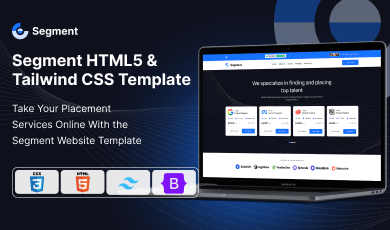
Given those criteria, one template worth evaluating directly is the Segment - Staffing and Recruiting Website Template from Bitrix Infotech, built specifically for staffing agencies, in-house recruiters, and freelance placement professionals.
The Segment template is built with HTML5 and Tailwind CSS and ships with six core pages:
Home
About
Job List
Team & Blog
A Contact form
A separate Contact page
That page set maps directly onto the elements outlined above: a job listings page for candidate discovery, a team page for credibility, and a blog for ongoing SEO content, all included rather than sold as add-ons.
The package includes HTML pages, a CSS file, a JS file, the Tailwind CSS framework, full documentation, and a read-me file with the components a developer needs to install and customize the site without guesswork. Bitrix Infotech markets the template as responsive and frontend-ready, meaning it's designed to adapt across screen sizes out of the box and to serve as a base developers can extend as an agency's needs evolve.
According to the product listing, Segment is designed for recruitment agencies, in-house recruiters, and freelance recruiters essentially any placement-focused business that wants a working website without commissioning a custom build. The template comes with a license to modify it for personal or business use, though it does not include a resale license.
Run the Segment template against the key-elements list above, and it holds up: dedicated job listing page, a combined team-and-blog page for both trust-building and SEO, distinct contact channels, a responsive Tailwind CSS foundation, and documentation included in the package. For a staffing agency evaluating recruitment website templates on a limited budget and timeline, it's a reasonable starting point to preview directly rather than commissioning a build from zero.
Just seeing the presentable homepage animation does not make the right recruitment website template. It's the one that gets a candidate from "found the job ad" to "submitted the application" with the fewest possible clicks. Along with it should offer the agency's brand enough presence to look credible to both candidates and clients. Whatever template an agency ultimately chooses, checking it against the job-listing, trust, contact, and content criteria above is a faster way to separate the templates. Do not select what looks good in a preview screenshot; prioritize the functionality the template provides.
Most HTML-based templates aren't pre-wired for ATS platforms, but developers can add API integrations later using the clean underlying code structure.
Templates don't include translation out of the box. Back-end developers can add multilingual support manually since the HTML structure stays editable.
Basic HTML and CSS knowledge helps, but detailed documentation usually lets non-developers make text, color, and logo changes without deep coding skills.
Some templates include placeholder or sample images for presentation. During website development, agencies typically replace them with branded photography or licensed stock for a professional look.
Generic recruitment website templates suit most niches, though highly specialized agencies may need added fields or filters for industry-specific job listings.
 Similar Blogs
Picking the perfect style for your website is a major decision, especially in the vast scope of web...
Designing and developing a website may look tough and time-consuming. It is actually tough when it c...
Developing a website has now been important to reach a wider audience. Performing web development fr...
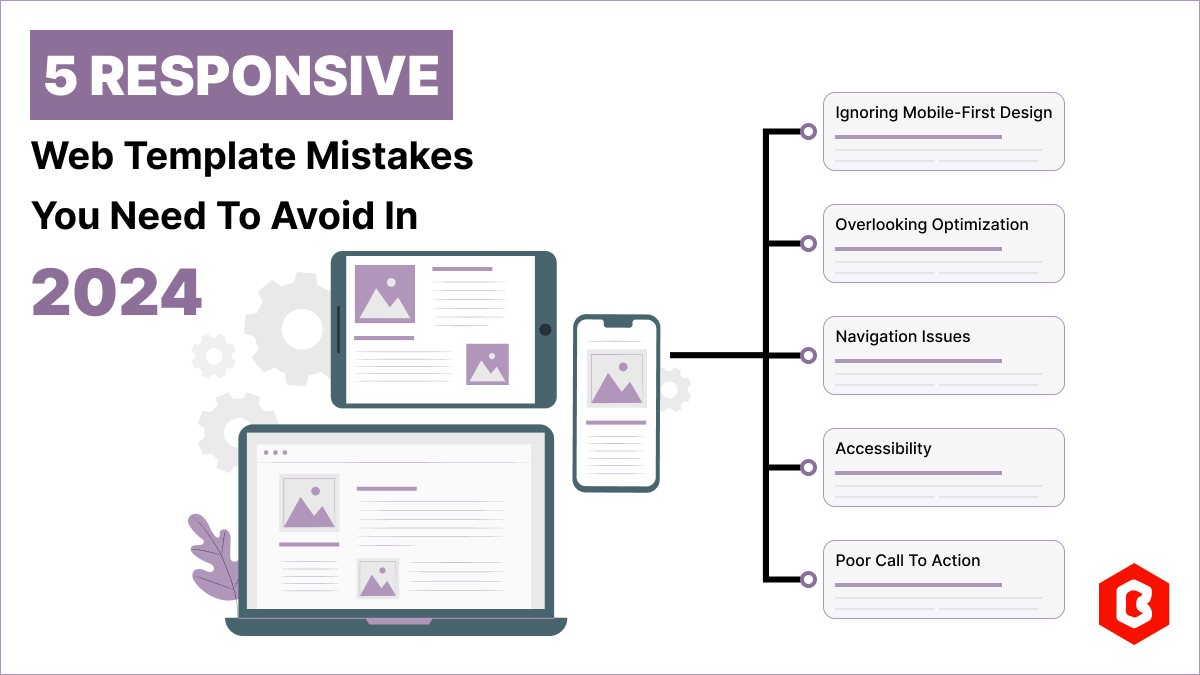
Having a responsive web template can help you succeed and keep your business ahead of the competitio...
Do you know? The Jewelry Market value is hitting the limit of 310.88 Billion USD in 2024 and by 2028...
When the world is going online, having a responsive website that works flawlessly across all devices...
Related Products 
Not sure which template or UI kit fits your project? Reach out for expert advice.
 100% Satisfaction Guaranteed
  Shop with Confidence!
 Tags
Tags