Buy any 1 product and get 1 absolutely free — this offer applies to all Website Templates, UI Kits, and Complete Scripts.
Buy Now! Article Information Table Of Contents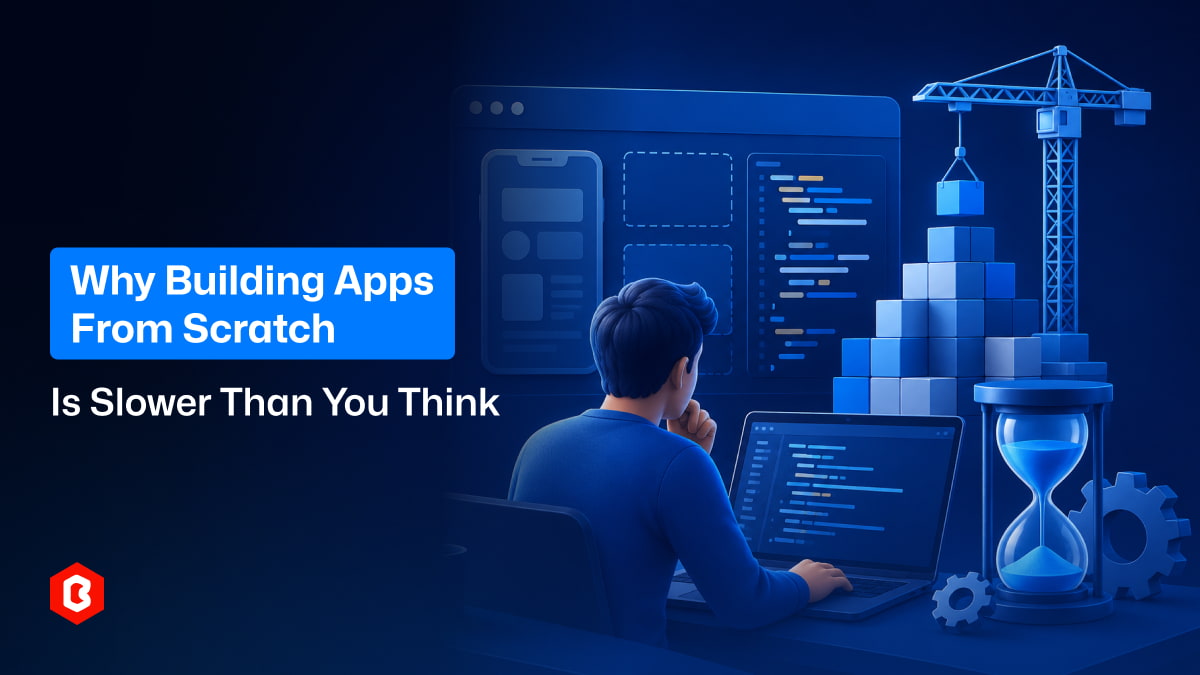
If you’ve ever thought, “Let’s just build it from scratch; it’ll be better,” you’re not alone. Honestly, a lot of people think this way in the beginning. It sounds clean, flexible, and kind of exciting, too. But once the work actually starts, things feel slower than expected. Way slower sometimes. And it’s not because your team is bad or lazy. It’s just how building from scratch really works in real life. Let’s talk about it in a simple way.
Starting from zero feels powerful. No old code. No restrictions. No messy structure. You get to design everything your way.
In your head, it looks something like this:
Perfect UI
Smooth performance
Exactly the features you want
But in most cases, this is where the illusion begins. Because building from scratch is not just about building your features, it’s also about building everything around those features. And that part takes time. A lot of it.
Here’s something many people underestimate. When you build from scratch, you’re not just building the main idea of your app. You’re also building:
Login systems
User authentication
Database structure
Error handling
Security layers
Admin panels
These things are not “extra.” They are required. And the funny part? Users don’t even notice them when they work well. But they take a big chunk of your time. You might think, “This should take a day or two”. But then it stretches into weeks.
On the other hand, suppose you have bought an app UI kit or a Flutter app template. They will remove the app UI design part or the app development part, respectively.
Let’s say you want to add something simple like notifications. Sounds easy, right? But then you realize:
You need push notification setup
Device token management
Background services
Testing across devices
Now multiply this by every “small feature” in your app. That’s when things start slowing down. You might notice your timeline slipping, even though you’re working daily.
Let’s take a basic example. Imagine you want to build a small food ordering app for a local restaurant. Nothing too big. At first, it feels like:
Menu
Cart
Checkout
Done, right? But when you actually start building, you run into things like:
Payment integration
Order tracking
Notifications
Admin dashboard for restaurant
Customer history
Offer or discount logic
Suddenly, your “simple app” is not that simple anymore. And since you’re building everything from scratch, every part needs time.
Testing is one of those things people don’t talk about much in planning. But it takes time. And it should. When you build from scratch, every feature needs to be tested properly:
Does login work on all devices?
What happens if payment fails?
What if the internet drops halfway?
These are real situations. And fixing bugs is not always quick. Sometimes one fix breaks something else. So yes, progress slows down here too.
This happens a lot. You build something. It works great. Then later you realize:
It doesn’t scale well
It’s hard to update
Or the structure is messy
So you rewrite it. Honestly, this is normal. But it adds time. When you start from scratch, you don’t always get things right the first time. You learn as you go. And learning takes time.
If you’re working with a team, things get even more interesting.
Because now:
Developers need to sync
Designers update screens
Feedback loops happen
Sometimes a feature is ready, but it waits because something else isn’t done yet. Or someone misunderstood a requirement. That happens more often than you think. Even a small miscommunication can delay things by days.
Startups face this a lot. They plan to launch in 2–3 months. Everything feels achievable. Then halfway through, they realize:
Too many features are pending
Bugs are increasing
Timeline is slipping
At that point, they either rush (which affects quality) or delay launch. And usually, it’s because they chose to build everything from scratch.
When you build from scratch, you’re not reusing much. Every function, every screen, every flow. You create it yourself. Compare that to using templates or pre-built systems, where a lot is already done.
Here’s the difference in simple terms:
Scratch build → Full control, but slow
Pre-built solution → Faster, but slightly less flexible
Most people don’t realize how much time reuse actually saves.
No matter how well you plan, something unexpected will happen.
Maybe:
A library doesn’t work properly
An API fails
Performance drops
Now you spend time debugging instead of building. And debugging is unpredictable. Sometimes it takes 10 minutes. Sometimes 2 days. That’s another reason things slow down.
This might sound obvious, but it’s true. Building from scratch is slow because:
You are creating everything
You are solving problems from zero
You are testing every part
There’s no shortcut here. It’s like building a house brick by brick instead of using pre-made blocks. Both work. One just takes longer.
Not always. There are cases where it makes sense:
You need a very unique product
You want full control
You have time and resources
But for many projects, especially early-stage ones, it might not be the best choice. Sometimes, starting with something ready-made and then customizing it later works better.
Instead of going fully from scratch, many teams do this:
Start with a Flutter template or an app UI kit
Customize based on needs
Replace parts gradually
This way:
You launch faster
You test your idea early
You save development time
Honestly, this approach feels more practical in most cases.
Building apps from scratch sounds exciting. And yes, it gives you full control. But it’s slower than people expect. Not because of one big reason, but because of many small ones. The extra setup. The hidden work. The testing. The rewrites. All of it adds up. So next time you think, “Let’s build everything from zero,” just pause for a moment.
Ask yourself:
Do I really need to build everything?
Or can I start faster with something ready?
There’s no single right answer. But understanding the time cost helps you make a better decision. And honestly, that alone can save you weeks, or maybe even months.
 Similar Blogs
AI (Artificial Intelligence) is shaking things up in the education industry as well! According to a...
In today's world, web applications are controlling the business arena. Whether it's an eCommerce web...
Hamster Kombat is a tap-to-earn crypto game where players are designated as virtual CEO. In developi...

Online Sports betting apps are considered as the source of earning passive income but with that, the...

Every business needs better marketing to promote their products and services. Nowadays, they prefer...

The cryptocurrency world is transforming at every moment. That world is not just limited to only exc...

Not sure which template or UI kit fits your project? Reach out for expert advice.
 100% Satisfaction Guaranteed
  Shop with Confidence!
 Tags
Tags