Buy any 1 product and get 1 absolutely free — this offer applies to all Website Templates, UI Kits, and Complete Scripts.
Buy Now! Article Information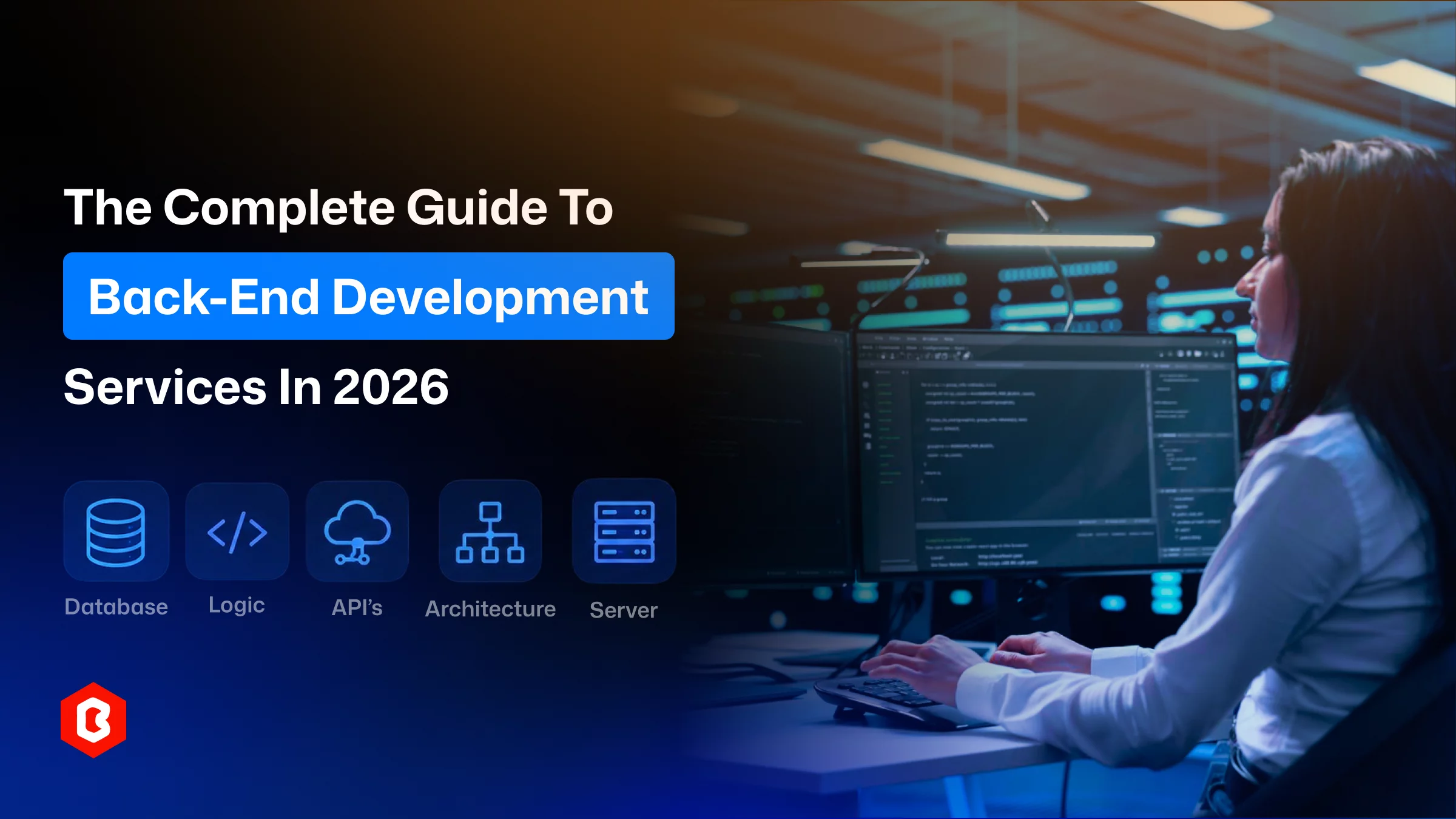
As a user, the last time you logged into a ticket-booking website, maybe bought online products from an e-commerce store, or hit a “submit” button on a form. Once you complete everything, you can’t see what’s going on behind the scenes. If there is no code, no database queries, no server spinning up a response. You just saw a spinner, then a confirmation. That gap between your click and the result is where back-end development lives.
At its core, back-end development services are related to building and maintaining everything that happens on the server side of a website or app. What happens at the back end, users never see but absolutely depend on.
If you're a business owner trying to figure out whether you need this, or a startup founder trying to understand what you're actually paying for back-end, this guide walks through it. Know what these services cover, why they matter more than most people assume, the different types you might need, and the technology stack that's actually being used right now.
People assume "back-end" a lot, but it covers a fairly specific set of responsibilities:
Your website has multiple types of data, and back-end developers designed the databases to manage it. This includes user accounts, product listings, order history, and whatever details the app collects.
The logic setup is important in the back end. Like, when a user wants to access their account on the website, the server checks the entered password with the stored one. Once it matches correctly, the server lets them access the account.
To add functionality to your website and app, Application Programming Interfaces (APIs) exist. Their work is to become a translator between your front-end app and back-end. Every time an app fetches new content or submits a form, an API is doing the work.
This is the overall blueprint for back-end data management. Back-end architecture includes how databases, servers, and services are organized so they work together as the product grows.
Servers in back-end systems are working as actual machines, or you can say they're cloud instances. They receive requests, process them, and send back a response. All this happens usually in a fraction of a second.
Put it all together, and back-end development is what turns a good-looking design into something that actually functions.
A lot of businesses pour their budget into design and marketing and treat the back-end like plumbing, something you only think about when it breaks. That's a costly mindset, and here's why.
To run the back-end logic correctly for login, search, checkout, and draft saving, server-side management is required. We can say that a beautiful front-end website with a shaky back-end is like a nice car with no engine.
In web development, the back-end has one intention: to protect the data that could be customer information, payment details, or order history. All of it sits in databases, and if that layer is sloppy, you're not just risking bugs; you're risking a breach.
Despite your website or mobile application claiming the security is top-notch, it should be. The back-end concerns are Password hashing, access permissions, and protection against common attacks. A weak back-end is genuinely one of the easiest ways for a business to end up in a breach headline.
Your web application needs a secure integration with third-party tools, including payment gateways, CRMs, shipping APIs, or social logins. Back-end helps to build and maintain those connections.
If your app feels sluggish, the problem is not in the design. The issue is in inefficient database queries, poor server configuration, or back-end code that wasn't built to handle real traffic.
A back-end that works fine for 200 daily users can fall over completely at 20,000. Planning for growth from the start saves you from an expensive, disruptive rebuild of systems later.
Back-end work isn't a single service. It’s a category that splits into several distinct specialties, and most projects need a combination of them.
Here, back-end APIs are built specifically for your app's needs, whether that's a mobile app pulling live data or two internal systems that need to talk to each other. With proper testing and documentation, future developers aren’t left guessing how it works. In a custom API, there’s no usage of generic and off-the-shelf endpoints.
In your website or app use case, the database has to be designed and managed accordingly. First, structure it so queries stay fast even as data grows, and set up backups so you're never one bad server crash away from losing everything.
In server-side logic, the actual programming work started. Here, the developers write the rules and processes that run every time a user interacts with your app. For example, Authentication, calculations, workflows, permissions.
Most back-ends today run on AWS, Google Cloud, or Azure rather than physical servers. This service is about building specifically for the cloud, taking advantage of things like auto-scaling and serverless functions. Treating the cloud like a rented server room doesn't exist here.
Online stores have their own set of demands for inventory tracking, secure checkout flows, order management, tax and shipping integrations. Given how much money and personal data flows through these systems, the margin for error is small.
Older platforms running on outdated tech eventually need to move to something current, ideally without taking the site down for days in the process. This is its own skill set, like migrating live systems carefully.
Building a back-end is only half the job. Server management and maintenance offer monitoring uptime, applying security patches, and catching problems before users notice them.
In microservices development, a tightly coupled back-end is broken into the system where smallers, independent services. It's more work upfront but makes updates, scaling, and troubleshooting far less painful later.
The tools change fast in this field, so here's a realistic snapshot of what's common right now.
First, Node.js as it remains a go-to back-end language. It is capable of handling lots of simultaneous connections efficiently when a product needs real-time features.
The second one is Python, and it still leads for readability and its use in data-heavy or AI-connected back-ends. This language can usually be paired with Django and Flask.
PHP, especially through Laravel, continues to run a huge portion of the web despite people periodically declaring it "dead."
How can we forget Java? Java holds strong in large enterprise systems that need to be rock solid.
Go has picked up serious attention for performance-critical, high-concurrency systems offering to applications.
Ruby on Rails still has a loyal following for how quickly it lets teams build production-ready products.
For data handling, Express.js is lightweight and works efficiently with Node.js.
When it comes to quick prototypes and full production apps, Django and Flask for Python projects are the choice.
PHP developers utilize Laravel to build in tools for routing and authentication. There’s no need to manage the workflow from scratch.
Spring Boot for enterprise-grade Java systems optimized to manage complex tasks and calculations.
NestJS is useful for back-end teams that require structure in a Node.js codebase with TypeScript.
For medium to large-sized web application back-end requirements, MySQL and PostgreSQL offer structured and relational data.
MongoDB database become useful when the data doesn't fit neatly into rows and columns.
Redis database work perfect for caching and speeding up anything accessed frequently.
REST is still the default API in back-end for most projects because it's simple and well understood.
GraphQL is picking up steam where apps need more flexible, efficient data queries to be handled.
WebSockets manage anything that needs to update in real time. This includes chat, live notifications, and dashboards.
AWS, Google Cloud, and Azure remain the three major players hosting back-end infrastructure for multiple applications.
Docker and Kubernetes are close to standard now for packaging and deploying applications consistently on the web.
CI/CD pipelines, often built with GitHub Actions or Jenkins, automate testing and deployment. So, releases don't depend on someone manually checking a dozen boxes.
Encryption, OAuth and JWT for authentication, firewalls, and regular audits aren't optional extras anymore. They’re baseline expectations given how common attacks have become.
Every business needs a different depth of back-end work. A few things worth thinking through before you commit to a provider:
How complex is the actual project? A basic company site needs far less than a multi-vendor marketplace.
Are you expecting real growth? If so, ask specifically about scalability experience, not just current capability.
Are you handling sensitive data? Payment info, health records, or personal data raise the security bar significantly.
What will back-end need to connect to? Make sure whoever you hire has actually worked with the specific tools you rely on.
What happens after launch? Good documentation and ongoing support save you from being stuck if something breaks later.
How is pricing structured? Flat project fee, per-API, or hourly; know what you're agreeing to before work starts.
Nobody notices good back-end development. What users notice? A page loads slowly, a payment fails, or a login screen throws an error for no obvious reason. Getting it right the first time is almost always cheaper than fixing it after launch.
The specific service you need really comes down to what your product is trying to do and how big you expect it to get. Start there, and the right approach usually becomes obvious.
What's actually included in back-end development services?
In back-end development, server-side logic, database design, API development, security implementation, and ongoing maintenance are usually included.
How is pricing usually structured for back-end?
It’s not fixed. Some service providers offer a flat project fee, and others provide it per API or per feature. An hourly fixed charge is also common.
Can I get custom APIs built for my specific app, or is it all templates?
Custom APIs are standard for complex apps. Most serious back-end teams build endpoints around your actual requirements rather than handing you a generic package.
How do developers actually make sure a back-end scales?
It depends on the right database choice, efficient API design, and cloud infrastructure. That can add resources automatically as traffic grows.
What's the difference between front-end and back-end development?
Front-end includes layout, design, and interaction development. Back-end development manages the tasks for processing data, running logic, and talking to databases.
 Similar Blogs
Having an interactive and functional website is a core aspect of making a successful online business...
Nowadays, every business is operating from an online website which is called a virtual shop. From eC...

In today's digital age, having a strong online presence is no longer a luxury for local businesses -...

AI (Artificial Intelligence) is shaking things up in the education industry as well! According to a...
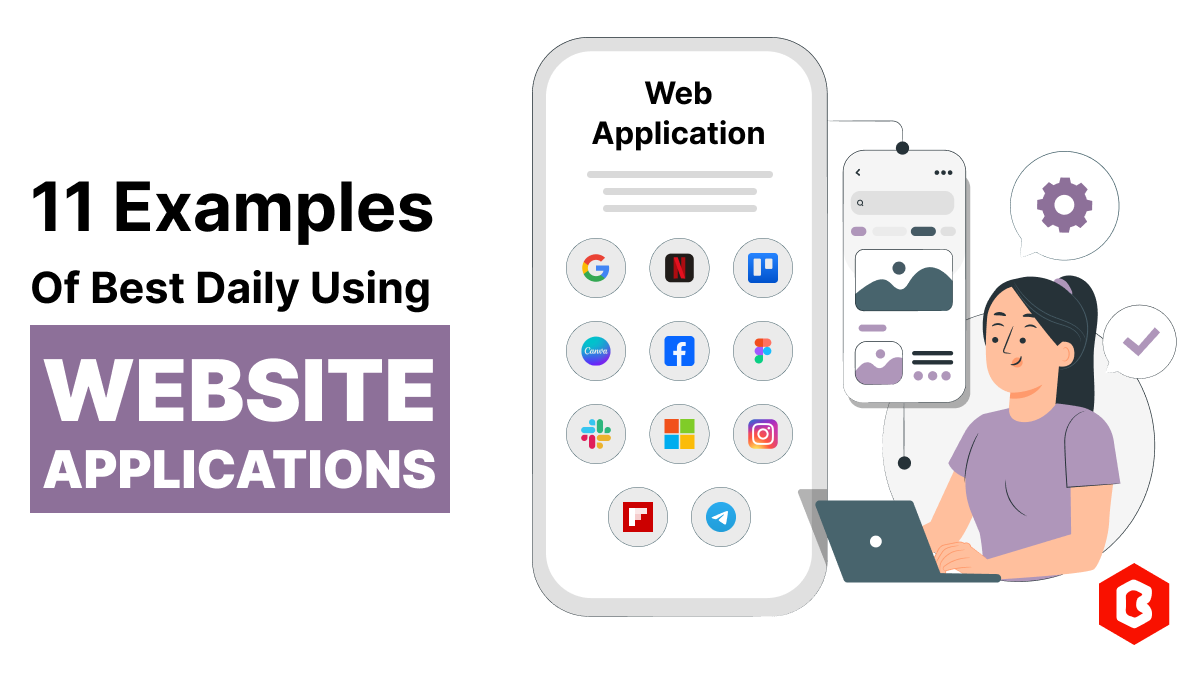
In today's world, web applications are controlling the business arena. Whether it's an eCommerce web...
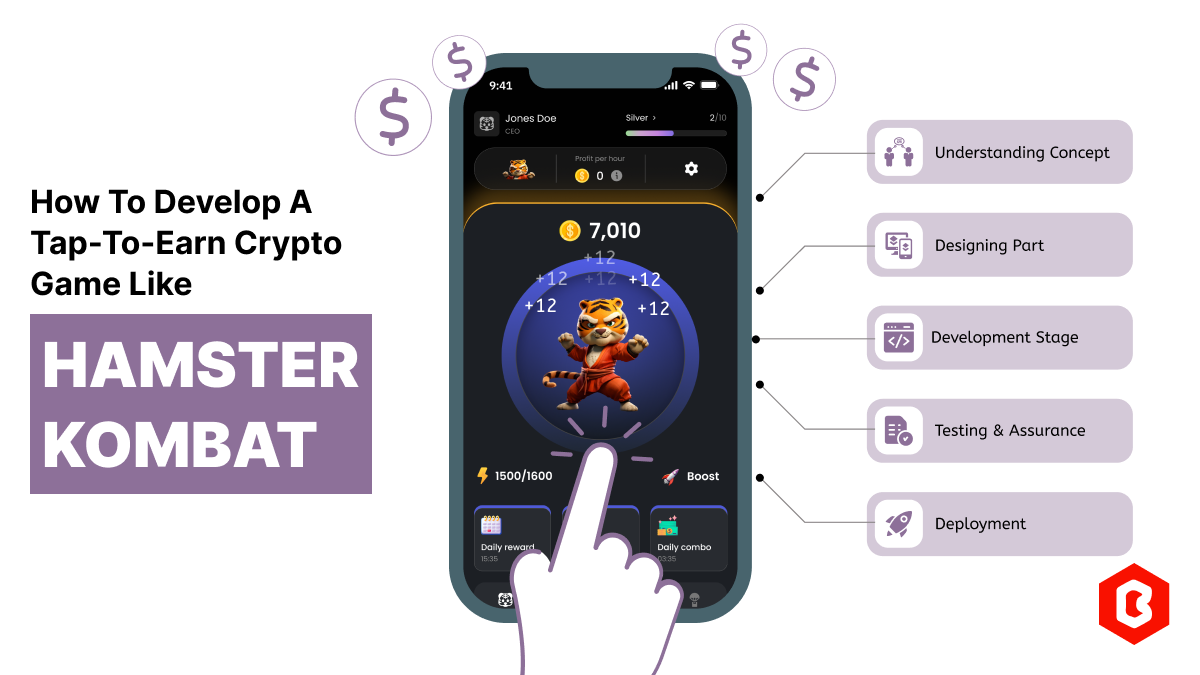
Hamster Kombat is a tap-to-earn crypto game where players are designated as virtual CEO. In developi...
Related Products 


Not sure which template or UI kit fits your project? Reach out for expert advice.
 100% Satisfaction Guaranteed
  Shop with Confidence!
 Tags
Tags