Buy any 1 product and get 1 absolutely free — this offer applies to all Website Templates, UI Kits, and Complete Scripts.
Buy Now! Article Information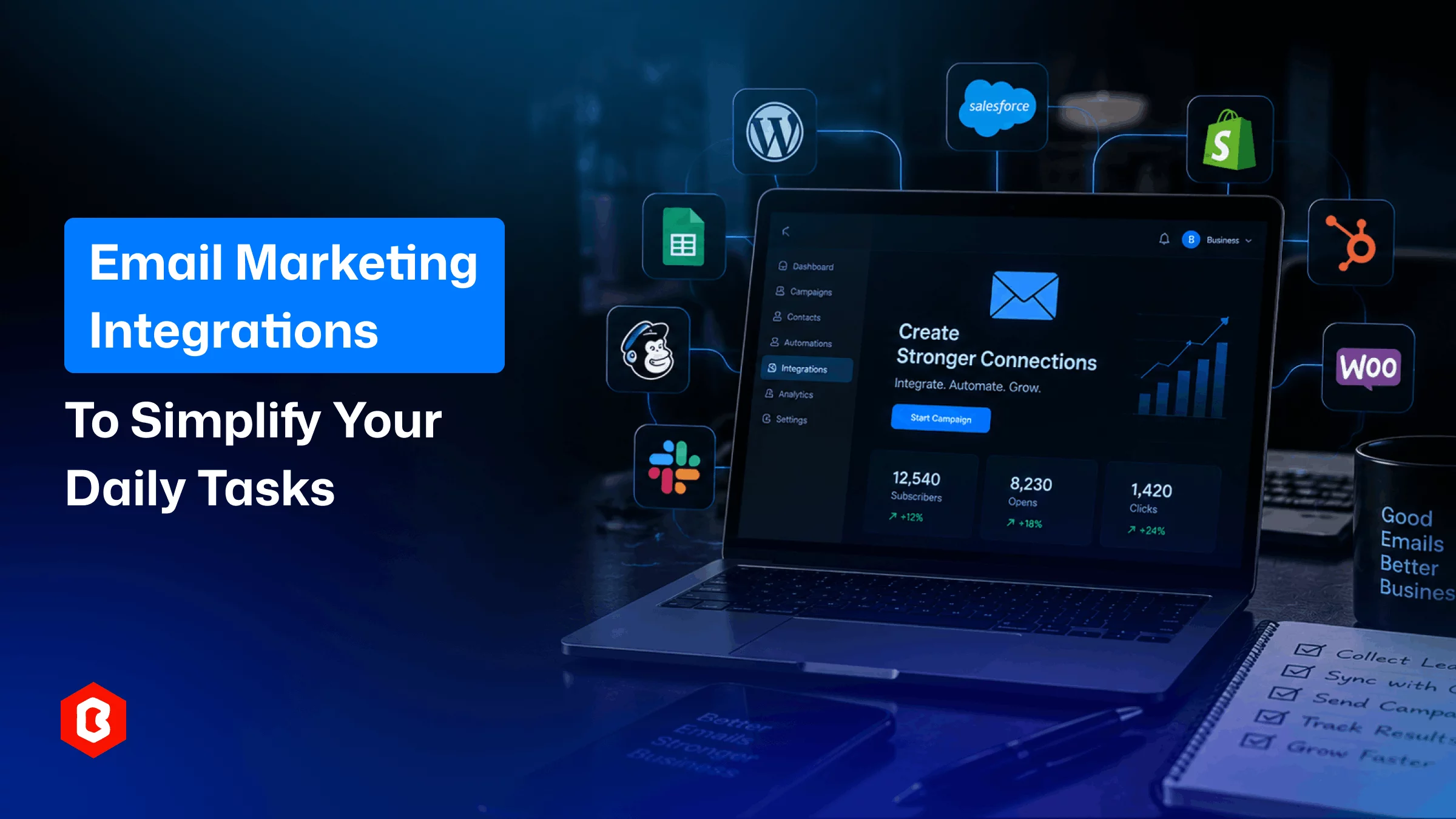
Email marketing is a useful way to stay connected with customers. Businesses use it for newsletters and product updates. They can also use it for offers and reminders. It supports many other types of communication as well.
But email marketing doesn't work alone.
You may already have a website for collecting leads. You may use a CRM for customer information and an eCommerce platform for managing orders. Your email marketing platform handles the campaigns. Managing these platforms separately can create extra work.
This is where Email Marketing Integration can help.
You can allow your tools to work together instead of moving information manually. This can make your routine tasks easier and give your team more time for other work.
Most businesses already use multiple tools. The problem is that these tools don't always share information automatically.
Suppose someone may submit a form on your website. You may then need to copy that person's details into your email marketing platform. The same thing can happen when a customer makes a purchase or updates their information.
You may not notice this work when there are only a few customers. But as your business grows, these small tasks add up.
Integration removes some of this manual work.
Your website is often the first place where you collect customer information. You can promote your project on platforms such as X and Telegram. You can also use Discord and Reddit. Other crypto communities can help you reach more people.
You can connect these activities with your email marketing platform. Once the integration is configured, new contacts can be added automatically. You can also decide which list or campaign should receive the new contact.
This means your team doesn't have to check the website and update the email platform manually.
Your CRM contains useful information about leads and customers. It may include their contact details and purchase history. It can also include their interests and current status.
You can connect the CRM with your email marketing platform. This allows you to use this information for email campaigns.
Suppose you may want to send a different email to a new lead than you send to an existing customer. You can also use customer information to create specific email segments.
This makes it easier to send relevant emails without maintaining the same information in different systems.
Online stores generate customer activity throughout the day. Customers browse products and add items to their carts. They can then make purchases and return to the website later.
This information can be useful for email marketing.
You can use customer activity for different campaigns when your eCommerce platform is connected with your email marketing system. You can send timely reminders for abandoned carts and product recommendations. You can also send special offers and purchase follow-ups. Other types of emails can help you stay connected with customers.
You don't have to check every order manually to decide who should receive an email.
Forms are simple, but they can create a lot of manual work.
Suppose your website receives 100 newsletter signups in a day. Someone needs to make sure those contacts reach the email marketing platform.
With an integration, this can happen automatically. You can also decide what should happen with different types of forms.
A newsletter signup can go to one list, while a sales inquiry can go to another. This keeps your contacts organized from the beginning.
The biggest change is that you spend less time moving information between platforms.
Your team can focus on creating campaigns and writing better emails. They can also analyze results and communicate with customers. The integration handles repetitive work in the background.
It can also reduce mistakes caused by manual data entry. For example, you don't have to copy an email address from one system and paste it into another.
This may look like a small improvement. But it becomes much more useful when you handle many contacts.
Integration doesn't mean that you have to automate every task.
You can also start with work that is repeated many times. If your team spends hours adding website leads to email lists, automate that first. If purchase follow-ups take too much time, connect your eCommerce platform.
If customer information is being updated in multiple systems, consider connecting your CRM.
This approach is easier to manage. You can add more integrations later when you need them.
The easiest option is usually a built-in integration. Many email marketing platforms already support popular websites, CRMs, eCommerce platforms, and other applications.
You can connect the platforms and configure the required settings.
But this option may not be enough for every business.
Your website or application may be custom-built. You may also need specific information to be transferred or want an automation that isn't available in the standard setup.
In these situations, you may need API integration or custom development.
The right option depends on your existing setup.
A custom integration is useful when your requirements don't fit a standard integration.
Suppose your internal business application needs to send customer information to your email marketing platform. You may also want to connect several systems and control exactly what information is shared.
A custom integration gives you more control over this process. However, it also requires technical knowledge.
This is where an Email Marketing Integration service can be useful.
The exact service depends on your requirements.
A professional team can first understand the tools you are using and the tasks you want to automate. They can then determine how the platforms should communicate with each other.
This may involve API integration, data mapping, custom development, testing, and other technical work.
The goal is simple.
Your existing tools should work together without creating more manual work for your team.
Before you start an integration, be clear about what you actually need.
Identify the platforms you want to connect first. Then decide what information needs to be shared between them.
You should also check whether the platforms provide a direct integration or API access.
Data security is another important point. Customer information should be transferred through a secure and appropriate method.
Finally, test everything before making the integration live. A small testing process can help you find incorrect data mapping, missing information, or automation problems before they affect real customers.
Bitrix Theme provides an Email Marketing Integration service for businesses that need to connect their email marketing tools with other systems.
You can use the service to connect websites, CRMs, eCommerce platforms, applications, and other business software.
The integration can be developed according to your requirements instead of forcing your business to follow a fixed workflow.
This can be useful when a standard integration isn't enough. It can also help when you need a custom connection between your existing tools.
Email marketing can become time-consuming with excessive manual work. You have to collect leads and update customer information. You also need to manage lists and send emails. Following up with customers is another important task.
You shouldn't have to keep moving customer information from one platform to another throughout the day.
Email Marketing Integration can help your tools work together. You can connect your website, CRM, eCommerce platform, forms, and other applications with your email marketing system.
Start with the tasks that create the most manual work. You can look at other areas that can be improved once those tasks are handled.
And if your requirements are more technical, an Email Marketing Integration service can help you build the required connection.
Email Marketing Integration connects an email marketing platform with another tool or application. So, connected systems can share information and reduce manual work.
Website integration can automatically transfer information from signup forms and contact forms. It can also transfer data from newsletters and other lead generation activities to your email marketing platform.
Yes. Connecting your CRM with email marketing helps you use customer and lead information. You can use this information for campaigns and segmentation. It can also help with customer follow-ups.
Yes. You can connect an eCommerce platform with your email marketing system and use customer and order information for different campaigns.
Yes. Small businesses can benefit from reducing repetitive tasks. You can start with one or two and add more later.
You may not need one for simple integrations that your platforms already support. However, custom connections and API integrations may require professional help. Complex workflows may also need expert assistance.
Not always. Some integrations can be configured without coding. Custom integrations usually require development work.
The cost depends on the platforms you want to connect. It also depends on the integration method and the level of customization. The features you need can also affect the overall cost.
 Similar Blogs
In today's digital landscape, email marketing remains a champion for all sizes of businesses whether...
As a business entrepreneur, you have frequently heard that your sales team uses another CRM software...

A crypto trading website needs more than a good-looking homepage. Users want to check prices and vie...

A casino website needs good graphics. No doubt. But you need game screens and clear menus. Players s...

Fashion stores need a website that feels easy to explore. Product images should get enough attention...
MLM and e-commerce are both popular business categories. Those who own businesses in these categorie...

Not sure which template or UI kit fits your project? Reach out for expert advice.
 100% Satisfaction Guaranteed
  Shop with Confidence!
 Tags
Tags