Buy any 1 product and get 1 absolutely free — this offer applies to all Website Templates, UI Kits, and Complete Scripts.
Buy Now! Article Information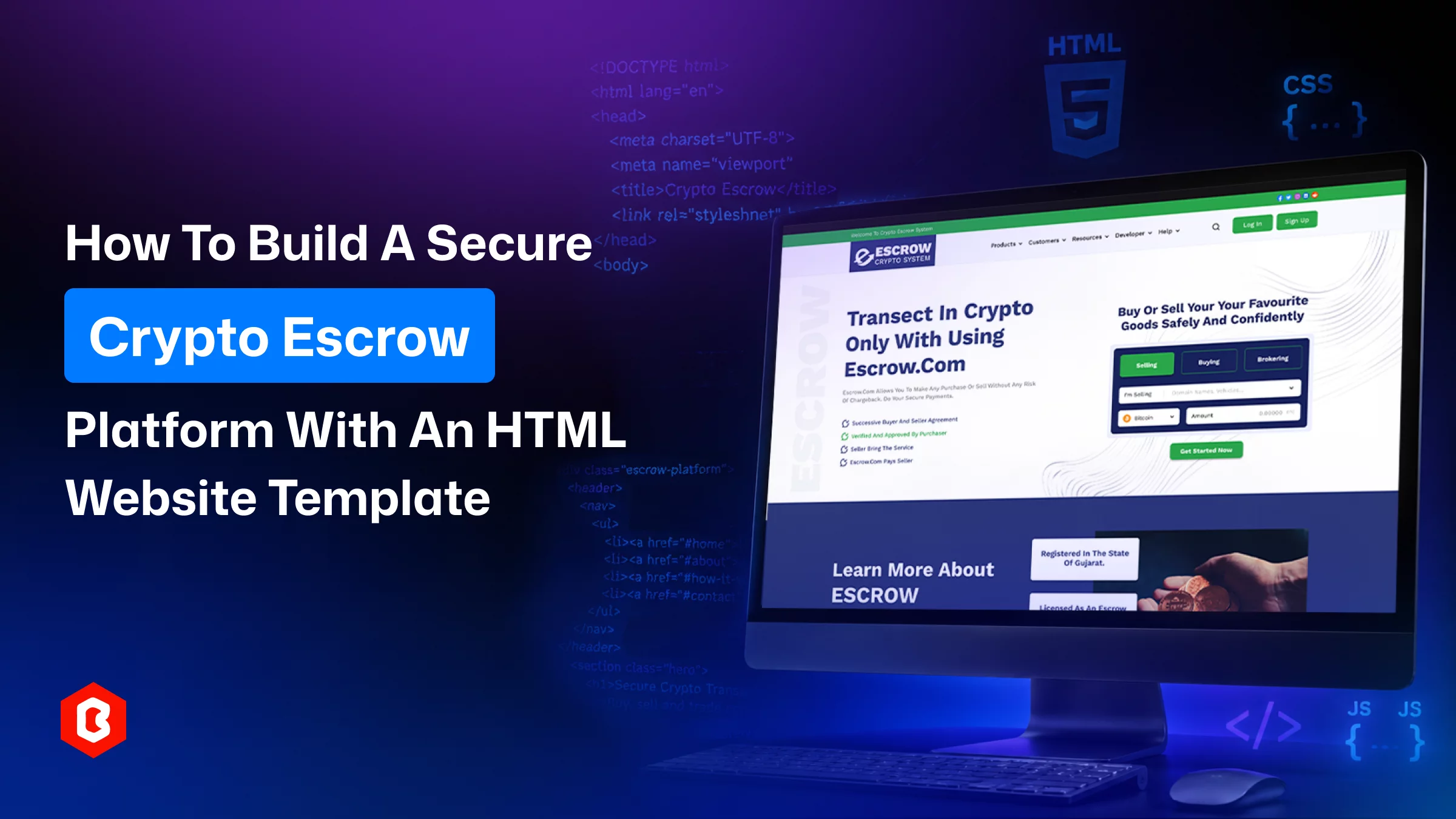
Send crypto to the wrong person, or the right person who just doesn't deliver, and there's no bank to call. No chargeback button. No customer service line that can claw the money back. That single fact explains why escrow for crypto has turned into one of the most requested features across the digital-asset economy right now. This is why so many founders are racing to launch an escrow crypto platform before the space gets crowded.
Here's the part that surprises people: you don't need a blockchain dev team or a six-figure budget to get moving. An escrow crypto website template can put a fully designed, launch-ready platform in front of your first users within days. Below is the actual escrow system platform development process, following steps, along with where a pre-built template saves you the most time.
Crypto escrow borrows its logic from traditional escrow, with one twist: the asset sitting in the middle is digital, not cash. A neutral third party (like your platform) holds the buyer's cryptocurrency in a secure wallet until agreed conditions are met, then releases it to the seller once the conditions are met. If a dispute comes up, funds stay frozen until it's resolved.
But the question is whether this model matters as of now, as it did even two years ago?
Let’s take an overview of the data.
Digital escrow services expect the sector to climb from $4.2 billion in 2025 to $7.6 billion by 2030.
Smart contract escrow arrangements on Ethereum alone have locked billions of dollars in value. This is proof that buyers and sellers genuinely want a trusted layer between them before they'll transact in crypto at any real scale.
Look at the freelance marketplaces, NFT trades, OTC crypto deals, and digital goods marketplaces; they all share the same weak spot.
Two strangers, no intermediary, an irreversible payment rail.
Scams and non-delivery show up often enough that "does this seller use escrow" has practically become a standard question in crypto circles. Solve that problem well, and you earn something worth paying for: trust.
Decide how money actually moves through your system before picking colors or fonts. At a minimum, nail down:
How a buyer initiates and funds a transaction
What conditions trigger fund release to the seller
What counts as a dispute, and who has the authority to resolve it
Your fee structure and which cryptocurrencies you'll support
Get this workflow right first. It becomes the blueprint for every dashboard screen, status label, and button you'll build next.
This is where most small teams lose weeks. They are sitting to sketch buyer flows, seller dashboards, and transaction screens. An escrow crypto website template skips that entirely, since it's already structured around exactly this use case: holding and releasing digital funds.
You can prevent this by paying a web designer to wireframe a “buyer dashboard.” Your development team has HTML pages, CSS, and JS files that already handle the core screens. Your job becomes customizing branding, copy, and integrations. Forget inventing architecture.
You’re making a website for an escrow system from a template, so it shouldn’t look generic anymore. Customization is required there. Usually, escrow platforms speak two languages at once.
Buyers want visibility into where their funds sit and what’s still required to release them.
Sellers need clarity on payment status and delivery deadlines.
Look for a template that already ships with separate dashboards for each role. This alone saves real planning time, because role-based UX is one of the easiest things to get wrong on a first attempt.
The front end is only half the job. But the functionality still doesn't exist. Behind it, you’ll need
Wallet infrastructure (custodial or multi-sig)
A blockchain payment gateway or API
Smart contract logic if you want automated release
Since HTML templates arrive frontend-ready, your developers can put nearly all their time into back-end wallet integration. They don’t have to manage pixel-pushing screens that already exist.
Nobody hands crypto to a platform that looks half-finished. Beyond the transaction flow itself, you need:
A plain explanation of how the escrow process works
Security and compliance messaging
Transparent, upfront pricing for the plans
An FAQ section that handles common objections before they become support tickets
Clear support and contact channels
A template that already has an FAQ section, CTA blocks, and a blog layout built in means you're filling in content here, not building sections from zero.
Run a full security audit on smart contracts and wallet integrations before anything goes live with real crypto funds on the line; this step isn't optional. Test the dispute path too, not just the happy path where everything completes smoothly. Once QA clears, launch with a handful of transactions first and scale from there as confidence in the system builds.
If steps two through five feel like a lot of ground to cover, that's because building it from scratch usually is. The Escrow Crypto System HTML Website Template exists to shrink that timeline.
It comes with:
Buyer and seller dashboards already designed
A user profile system
Transaction-type pages
CTA buttons
An FAQ section
A blog layout
There are pretty much every component covered above, ready out of the box. The codebase is clean, responsive, and documented, so your developers spend their hours on wallet and blockchain integration.
For what kind of businesses and service providers this template can work:
Freelance marketplace
Digital goods platforms
Crypto payment service providers
Startups looking for an MVP working product
Every purchase includes HTML pages, CSS and JS files, and full documentation, plus a license to customize it for your own business. It costs a fraction of custom design work, and right now, buying one product gets you a second one free. So, pairing it with a complementary crypto wallet template isn't a bad move if you want a more complete platform.
Crypto escrow sits right where two fast-growing trends meet: handling digital asset adoption and fulfilling the transaction security demand. The smart move is to use an HTML front-end template that already reflects how the escrow system works. Focus on wallet and blockchain integration and make a trust-first platform with minimal costs and time. The Escrow Crypto System HTML Website Template is built to get you there.
Escrow holds funds between two known parties until conditions are met. Exchanges match anonymous buyers and sellers for open-market trading.
Yes, but requirements vary by country. Most jurisdictions require money transmitter or virtual asset service provider licensing before launch.
No. Escrow can run on a custodial wallet controlled by the platform admin, though smart contracts add automation and cut down manual dispute handling.
Most charge a percentage of transaction value, typically 1–5%, either split between buyer and seller or paid by one party alone.
Start with Bitcoin, Ethereum, and a major stablecoin like USDT or USDC. These currencies cover volatility concerns and the widest possible user base.
 Similar Blogs
Today, we're going to discuss the real-world use of blockchain in everyday life by exploring several...
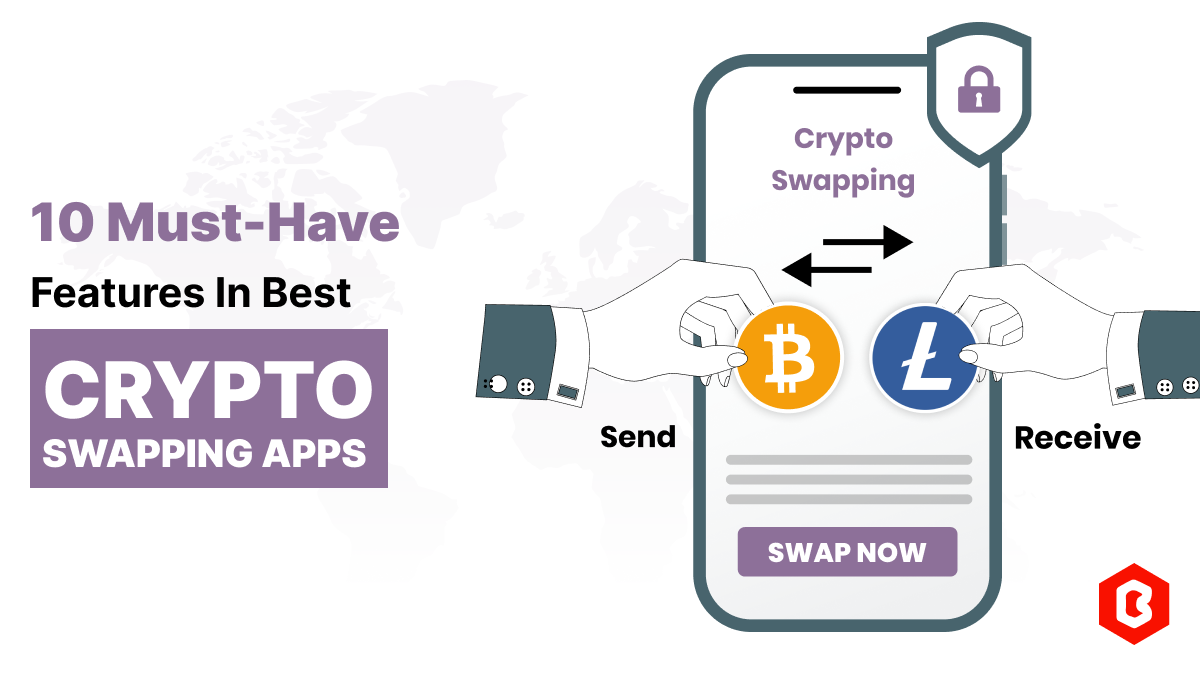
According to a study, the cryptocurrencies revenue value will hit the mark of 51.5 USD Billion by 20...

The cryptocurrency world is transforming at every moment. That world is not just limited to only exc...

In today’s competitive cryptocurrency world, a good social media earning app ui kit matters a lot. S...
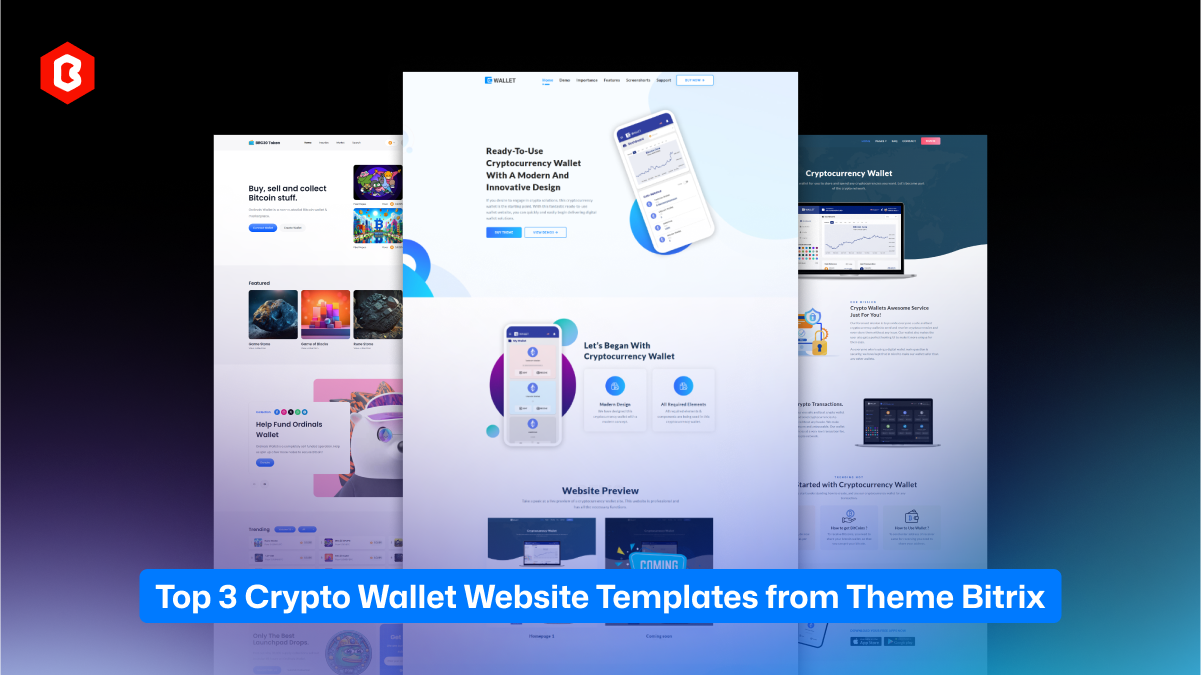
If you want to create a website for your online crypto wallet services, using a ready-made HTML temp...

Having a professional website for your apartment tenant service is such a valuable business asset. B...

Not sure which template or UI kit fits your project? Reach out for expert advice.
 100% Satisfaction Guaranteed
  Shop with Confidence!
 Tags
Tags