Buy any 1 product and get 1 absolutely free — this offer applies to all Website Templates, UI Kits, and Complete Scripts.
Buy Now! Article Information Table Of Contents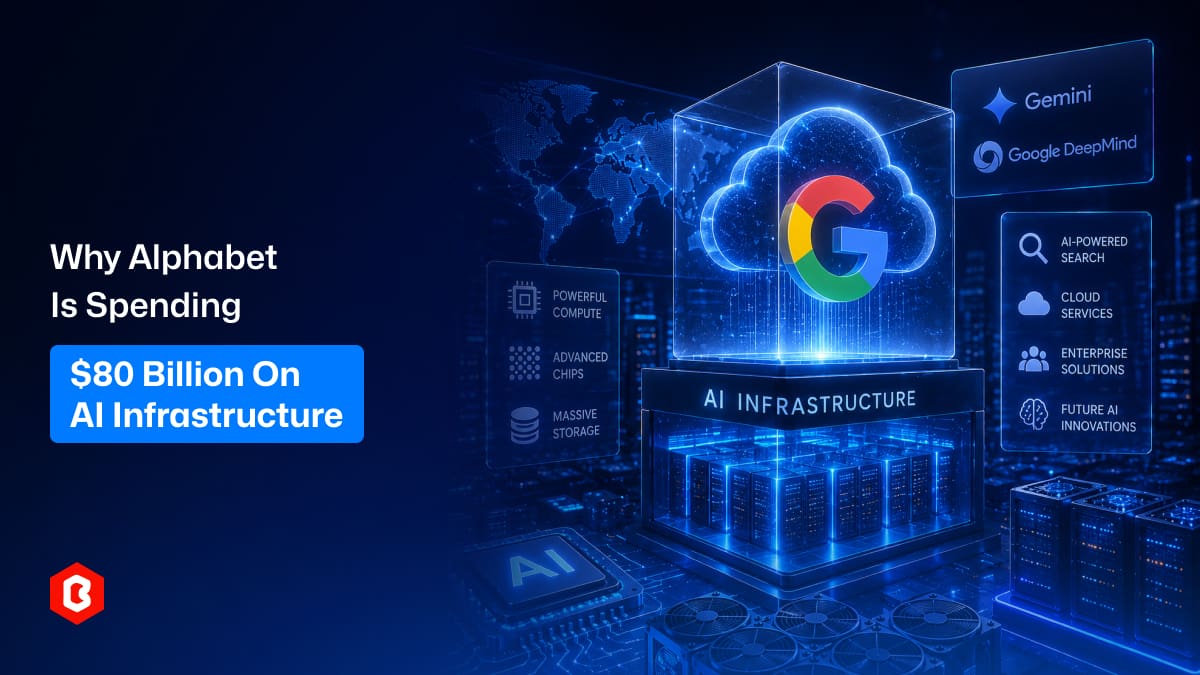
Artificial intelligence has become one of the biggest technology races in the world.
Companies everywhere are trying to build smarter models, better assistants, and more powerful digital experiences. But creating advanced AI systems requires much more than software. Behind every chatbot, search result, recommendation engine, and AI assistant sits an enormous amount of computing infrastructure.
That is why Alphabet, Google's parent company, announced its plans to spend approx $80 billion on AI infrastructure.
The number immediately grabbed attention because it represents one of the largest technology investments in recent years.
And honestly, the size of the investment shows just how seriously major companies view the future of AI.
Modern AI models require massive resources.
Training and running these systems involves:
Powerful processors
Specialized chips
Data centers
Networking equipment
Cooling systems
Energy infrastructure
Traditional software applications are relatively lightweight compared to AI systems.
AI models process enormous amounts of information constantly. And as millions of people use these services every day, the infrastructure requirements continue growing.
That demand is one reason costs are increasing so rapidly.
Alphabet is far from alone.
Major technology companies are investing too much in artificial intelligence.
Companies such as:
Microsoft
Meta
Amazon
OpenAI
Nvidia
are all expanding their AI capabilities.
Competition now covers:
AI assistants
Search engines
Cloud computing
Software development
Enterprise tools
Consumer applications
And honestly, infrastructure itself has become a competitive advantage.
The companies with the strongest computing resources can develop, train, and deploy AI systems faster.
Search itself is changing.
Instead of simply displaying links, users increasingly expect:
AI-generated summaries
Conversational answers
Personalized recommendations
Interactive experiences
Alphabet's infrastructure spending helps support products such as Gemini and the work being done by Google DeepMind.
These systems serve billions of users.
Real-life situation:
Imagine millions of people asking AI-powered questions every minute. Each request requires far more computing power than a traditional search query.
At that scale, even small increases in usage create enormous infrastructure demands.
And honestly, supporting AI for billions of users requires a completely different level of investment.
Another major reason behind the spending is cloud computing.
Businesses increasingly want access to AI-powered services for:
Content generation
Coding assistance
Customer support
Automation
Data analysis
Workflow optimization
As more companies adopt AI, demand for cloud resources rises as well.
Alphabet wants Google Cloud to remain competitive in this rapidly growing market.
Providing these services requires huge investments in servers, chips, storage, and networking systems.
The $80 billion investment is not only for today's products.
Alphabet is preparing for technologies that may become important years from now.
This could include:
More advanced AI assistants
Enterprise software
Scientific research systems
Robotics
Personalized digital experiences
New forms of search
Infrastructure projects take years to build.
Waiting until demand arrives would put companies behind competitors.
So many technology companies invest long before those systems are fully needed.
A few years ago, data centers mostly stayed behind the scenes.
Today they are becoming some of the most valuable assets in technology.
Modern AI facilities require:
Advanced chips
Massive storage capacity
High-speed networking
Efficient cooling systems
Reliable energy supplies
Without these resources, even the most advanced AI models cannot scale effectively.
In many ways, infrastructure has become just as important as the software itself.
Consumers are not the only beneficiaries.
Businesses rely heavily on cloud infrastructure for AI services.
For example, a company might use AI tools to:
Automate customer support
Generate reports
Analyze data
Assist developers
Improve productivity
All of these services depend on infrastructure maintained by companies like Alphabet.
As more businesses adopt AI, demand keeps increasing.
Imagine a startup building an AI-powered application.
Purchasing thousands of GPUs and building private data centers would be incredibly expensive.
Instead, developers can rent computing resources through cloud platforms.
This makes AI innovation accessible to smaller companies.
Without massive infrastructure investments, many startups would struggle to build AI products at all.
Interestingly, not everyone celebrated the announcement.
Some investors worried about the size of the spending.
Questions quickly appeared:
Will the investment generate enough returns?
Are costs growing too quickly?
Will profit margins decline?
Can competitors catch up?
Large investments often create short-term concerns.
But Alphabet appears to believe these expenses are necessary for long-term growth.
The company is essentially betting that AI demand will continue expanding for years.
A few years ago, AI felt experimental.
Today it is becoming deeply integrated into products and services.
Companies are adding AI to:
Search engines
Productivity tools
Shopping platforms
Customer support systems
Mobile apps
Software products
Businesses are no longer asking:
"Should we use AI?"
Instead, they are asking:
"How can AI improve this experience?"
That shift is driving infrastructure spending across the industry.
Alphabet is spending $80 billion on AI infrastructure because artificial intelligence requires massive computing resources and has become central to the future of technology.
From supporting Gemini and Google Search to expanding cloud services and preparing for future AI products, the investment reflects how important infrastructure has become in the AI era.
And honestly, the scale of spending shows that major technology companies no longer view AI as an experimental side project.
They see it as one of the foundations of modern digital experiences.
And the race to build that foundation is only getting bigger.
 Tags
Tags  Similar Blogs
Customers on eCommerce platforms often get frustrated because they can't find quick answers to their...

AI (Artificial Intelligence) is shaking things up in the education industry as well! According to a...

AI tools are becoming popular day by day. Platforms like ChatGPT have proven how conversational AI c...

AI tech companies are everywhere right now, but a few names keep showing up again and again in major...

AI companies are appearing everywhere right now, but only a few names keep getting serious attention...

A few years ago, AI features were mostly seen in experimental products or large tech company announc...

Not sure which template or UI kit fits your project? Reach out for expert advice.
 100% Satisfaction Guaranteed
  Shop with Confidence!