Buy any 1 product and get 1 absolutely free — this offer applies to all Website Templates, UI Kits, and Complete Scripts.
Buy Now! Article Information Table Of Contents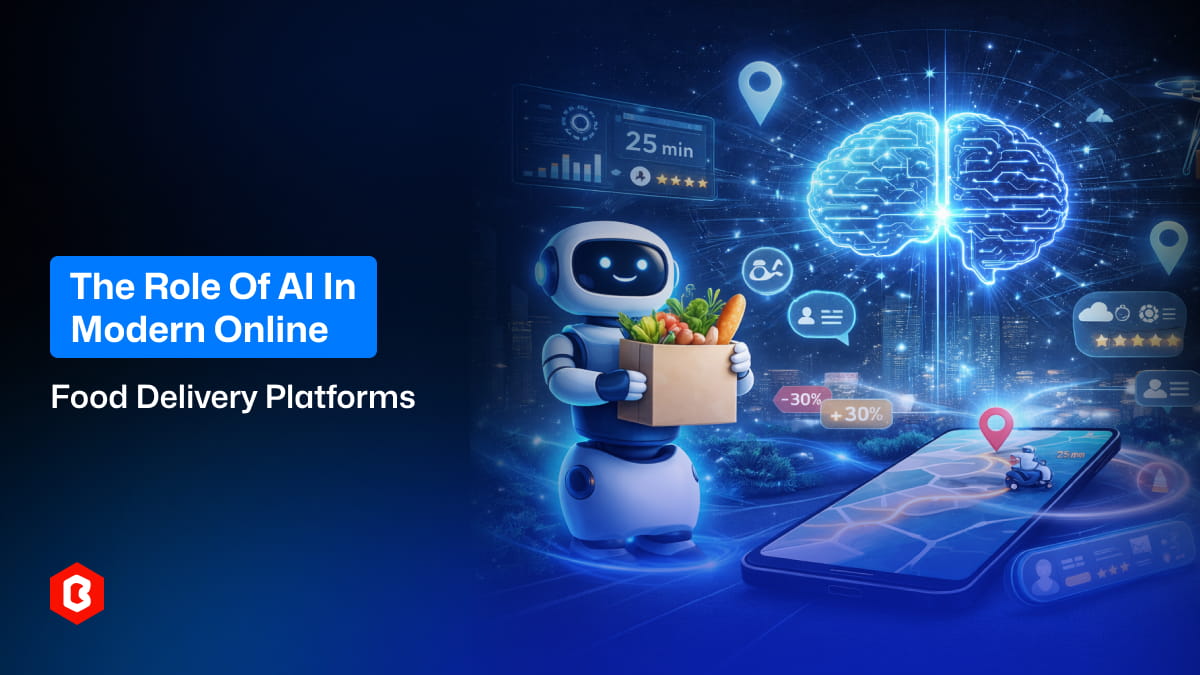
The food delivery industry isn't limited to ordering meals online. Instead, it has been combined with Artificial Intelligence, which has made it smarter. Today, online food delivery platforms use AI to personalize user experiences, reduce delays, improve efficiency, and increase customer loyalty. AI works silently in the background, but its impact is clear from the food suggestions you see to the delivery time shown on your screen.
AI studies user behavior over time. It tracks past orders, favorite cuisines, spending patterns, and usual ordering times. Based on this information, it shows relevant suggestions instead of random menu items.
For example, if a customer regularly orders biryani on weekends, they may see special biryani offers on Friday evening. This increases repeat orders and improves customer satisfaction.
Personalization makes the platform feel smarter and more user-focused.
AI starts multiple automated processes in the background when an order is placed.
Below is the typical order flow:
Checking food availability
Estimating preparation time
Assigning kitchen tasks
Selecting the best delivery partner
Automation reduces human errors and makes operations faster. Businesses that begin with a flexible food delivery website template can integrate these smart systems more easily and efficiently.
Delivery time accuracy directly affects customer trust. AI improves predictions by analyzing real-time traffic, weather conditions, order volume, and past delivery data.
Instead of giving rough estimates, customers receive more realistic delivery times. If traffic suddenly increases, the system adjusts instantly and updates the user.
This level of transparency improves the overall experience and builds stronger trust.
Traditional delivery routing depended mainly on the driver’s judgment. AI replaces this guesswork with real-time data analysis, making route planning faster and more accurate.
Impact of AI routing:
Faster deliveries
Reduced fuel consumption
Improved rider efficiency
Lower operational cost
A scalable food delivery app template makes it easier to integrate advanced AI-based routing systems that use real-time map data for better accuracy and faster deliveries.
Customer support has moved from manual call centers to intelligent chatbots. AI-powered bots provide instant responses without long waiting times.
AI chatbots can handle:
Order tracking
Refund requests
Basic complaints
Restaurant details
Cancellation queries
Chatbot interactions feel smooth, simple, and natural for users when we combine it with a well-designed food delivery app UI kit.
Apart from responding to orders, AI can also predict them.
By analyzing past trends, the system can anticipate high-demand periods such as:
Weekend evenings
Festival days
Rainy weather
Sporting events
Restaurants prepare ingredients and staff accordingly. This reduces food waste and improves service speed.
AI makes flexible pricing possible based on demand and user behavior. Inactive users may receive special offers to bring them back. Regular customers may get loyalty rewards. During peak hours, delivery fees can adjust automatically.
Businesses that use a structured food delivery web UI kit can display these dynamic offers clearly without confusing users.
Security plays an important role in online transactions. AI constantly monitors suspicious activities such as unusual payment attempts or fake accounts.
If any abnormal pattern is detected, the system flags it immediately. This helps protect both customers and businesses from financial risks. Strong AI-based security helps build long-term trust and reliability.
Voice-enabled ordering is becoming more common. AI allows users to place orders using simple voice commands, making the process faster and more convenient.
Instead of typing, customers can say:
“Reorder my last meal.”
“Find nearby pizza restaurants.”
This improves accessibility and speeds up the ordering process.
AI provides data-driven insights for restaurant partners. Instead of depending on assumptions, owners receive clear and accurate performance metrics. Important insights include best-selling dishes, low-performing items, peak order hours, and customer rating patterns.
These insights help restaurants make better decisions about pricing, marketing strategies, and menu planning.
AI tracks user activity and sends personalized notifications at the right time. For example, if a customer usually orders dinner at 8 PM, a reminder may appear at 7:45 PM. If their favorite restaurant introduces a discount, the system sends an alert immediately.
This type of targeted communication increases engagement and encourages more frequent orders.
Managing inventory manually can result in overstocking or unexpected shortages. AI helps by predicting ingredient demand and suggesting the right time to restock. It also studies supplier performance and seasonal consumption trends to improve planning accuracy.
Efficient inventory management reduces operational waste and helps increase overall profitability.
Cloud kitchens depend entirely on digital orders. AI helps them choose profitable locations, improve menu offerings, and manage multiple virtual brands from a single kitchen. By studying demand patterns, AI helps cloud kitchens reduce risks and scale their operations more quickly and efficiently.
Customer retention is more profitable than constantly acquiring new users. AI helps identify customers whose activity is slowly decreasing. When the system detects lower engagement, it automatically sends personalized offers or reminders. This proactive approach helps improve long-term customer value and loyalty.
AI in food delivery is evolving very quickly. The next phase is expected to bring deeper automation and smarter system integrations. Future developments may include autonomous delivery vehicles, robotic kitchens, AI-based nutrition tracking, and highly personalized meal suggestions.
As innovation continues to grow, online food delivery platforms will become even more intelligent, efficient, and customer-focused.
Artificial Intelligence has become the foundation of modern food delivery systems. It improves personalization, enhances logistics, strengthens security, and supports smarter business decisions. However, technology alone is not enough. It must be supported by strong design and scalable infrastructure. Choosing the right food delivery app template during development makes AI integration and future growth much easier. Businesses that adopt AI strategically today will be better positioned to lead tomorrow’s competitive food delivery market.
 Similar Blogs
We know having an online website for food delivery is a golden chance to offer your service. But a c...

Did you know that over 70% of food orders are now placed online instead of through traditional calls...

One thing to keep in mind: Hungry customers aren’t waiting, and neither should your food delivery we...

Food delivery apps have become an important part of daily life. People use them to order pizza for a...
The food chain business concept is becoming a favorite for many entrepreneurs. This category is idea...
The food delivery industry is growing quickly as more customers prefer ordering meals online instead...

Not sure which template or UI kit fits your project? Reach out for expert advice.
 100% Satisfaction Guaranteed
  Shop with Confidence!
 Tags
Tags