Buy any 1 product and get 1 absolutely free — this offer applies to all Website Templates, UI Kits, and Complete Scripts.
Buy Now! Article Information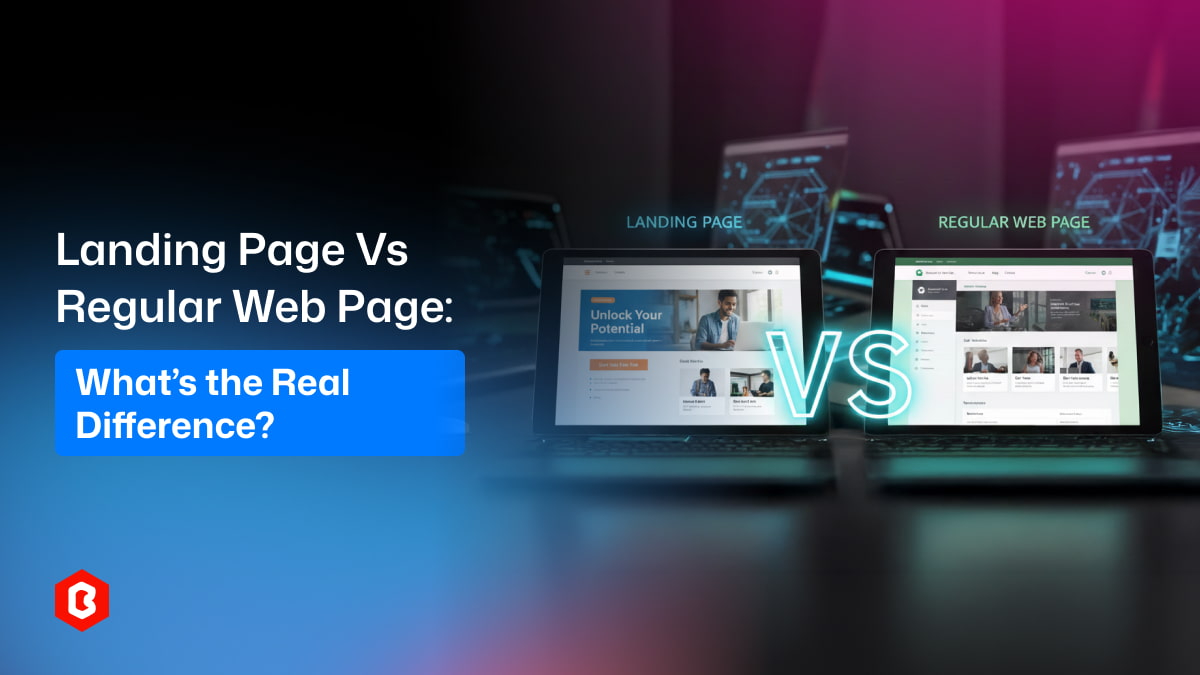
When you plan to build a website for your business, one common question comes up very early. Should you create a landing page or a regular website page? Many people think both are the same, but they are actually built for different purposes. Each one plays a unique role in online marketing and user experience.
A landing page is usually focused on one clear action. A regular website page is designed to share more information and help users explore your business. Understanding the differences between these two helps you choose the right option for your goals. It also helps you select the right landing page template or website template when building your site using a ready-made solution.
In this article, we will explain what a landing page is, what a regular web page is, and how they are different. So, it will help you know which one is better for your business needs.
It is only one web page created for a specific marketing purpose. Its main goal is to get visitors to take one clear action. This action can be filling out a form, downloading a file, registering for a newsletter, or buying a product.
Landing pages are often used in online ads, email campaigns, and social media promotions. When users click on an ad, they are sent directly to a landing page instead of a full website. This keeps their attention focused on one message.
A good landing page template is simple and clean. It usually has a strong headline, short content, and a clear call to action. There are very few links because extra links can distract users. The idea is to guide visitors toward one decision without confusion.
Most landing pages are built using a lightweight HTML template, so they load fast and work well on all devices. Speed and clarity are very important for landing pages.
A regular website page is part of a full website. It can be a homepage, about page, service page, blog page, or contact page. These pages are designed to provide information and help users view different sections of the website.
Unlike a landing page, a regular web page does not focus on just one action. It allows users to navigate freely. They can click menus, read content, visit other pages, and learn more about the business.
A regular website page is usually built using a complete HTML website template. These templates include headers, footers, navigation menus, and multiple sections. The goal is to build trust, explain services, and show credibility over time.
Regular web pages are useful when users want details before making a decision. They support long-term branding and search engine visibility.
To clearly understand how a landing page differs from a regular website page, it helps to look at specific factors. Each factor explains how the purpose, structure, and user experience change between the two. These differences make each page type suitable for different business goals.
A landing page is created with one clear objective. Its main purpose is to guide visitors to take a specific action, such as signing up, downloading, or making a purchase. Everything on the page supports this single goal.
A regular website page has many purposes. It is designed to inform users, explain services, and guide them through different sections of the website. Instead of pushing one action, it supports exploration and learning.
Landing pages use short, direct, and highly focused content. The message is clear, simple, and written to convince users quickly. There is no extra information that might distract visitors from the main action.
Regular website pages usually contain more detailed content. They explain topics in detail, answer common questions, and provide supporting information. This helps users understand the business better before making decisions.
Navigation is usually removed or very limited on a landing page. This keeps users focused on the call to action and reduces the chance of leaving the page without converting.
Regular website pages include full navigation menus, internal links, and footers. These elements allow users to move freely across the website and explore related pages.
A landing page template is designed to guide users visually from top to bottom. Headings, buttons, and images are placed carefully to lead attention toward the action button.
A regular website page follows a consistent layout used across the entire site. A website template or HTML website template focuses on uniform design, branding, and usability across multiple pages.
Landing pages usually receive traffic from ads, email campaigns, or social media promotions. Visitors arrive with a specific intent based on the message they clicked.
Regular website pages often receive traffic from search engines or direct visits. Users may be researching, comparing options, or simply learning about the business.
The conversion strategy of a landing page is simple and direct. There is usually one form, one button, and one clear message encouraging immediate action.
Regular website pages support conversion in a gradual way. They build trust over time by offering useful information, testimonials, and internal navigation before users take action.
Choosing between a landing page and a regular website page depends on what you want to achieve. Both are useful, but they are not interchangeable. Your business goals should guide your decision.
You should choose a landing page if your goal is to get quick results from marketing campaigns. If you are running ads, promoting a new product, collecting leads, or offering a limited-time deal, a landing page works best. A focused landing page built with a simple HTML landing page template helps keep users on track and improves conversion rates.
You should choose a regular web page if you want to build long-term trust and share detailed information. If your goal is branding, search engine traffic, or explaining your services clearly, a regular website page is better. Using a full HTML website template helps you create a structured and professional online presence.
In many cases, businesses use both. Landing pages drive action, while regular web pages build trust. When used together, they create a strong and effective online strategy.
 Similar Blogs
Picking the perfect style for your website is a major decision, especially in the vast scope of web...
Designing and developing a website may look tough and time-consuming. It is actually tough when it c...
Developing a website has now been important to reach a wider audience. Performing web development fr...
Today everything seems to be online whether it's an eCommerce store or a stock broker mobile app. Bu...
When the world is going online, having a responsive website that works flawlessly across all devices...
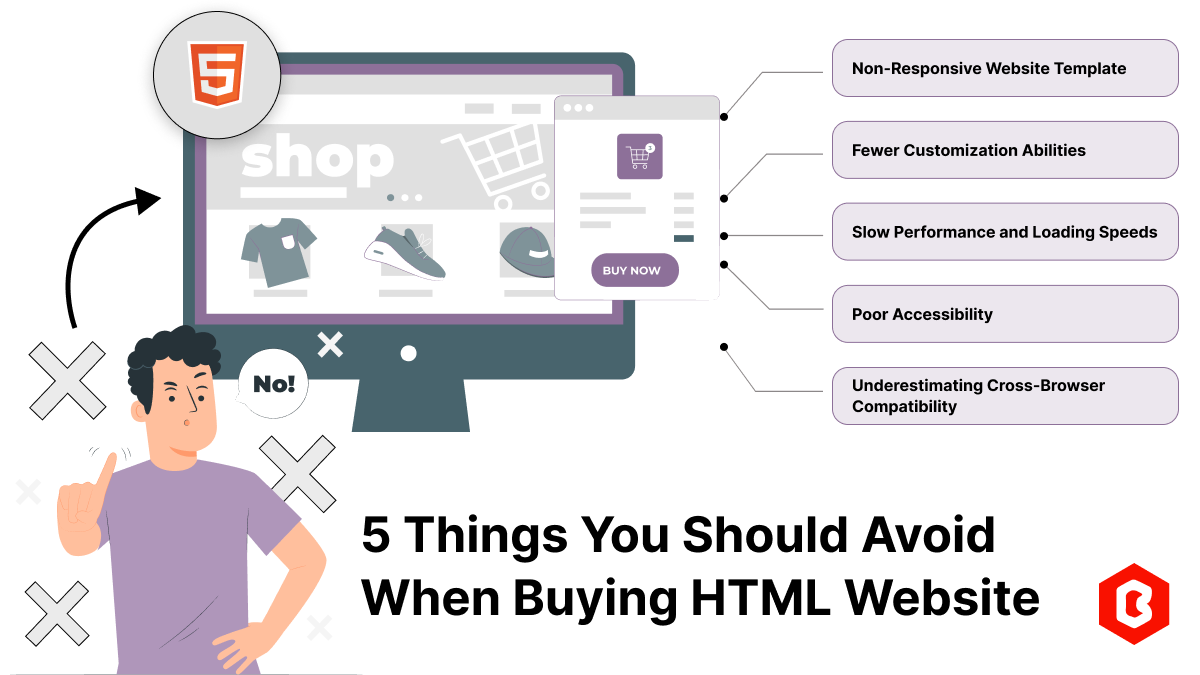
According to stats published on Forbes, 57% of internet users avoid recommending a poorly designed w...

Not sure which template or UI kit fits your project? Reach out for expert advice.
 100% Satisfaction Guaranteed
  Shop with Confidence!
 Tags
Tags